
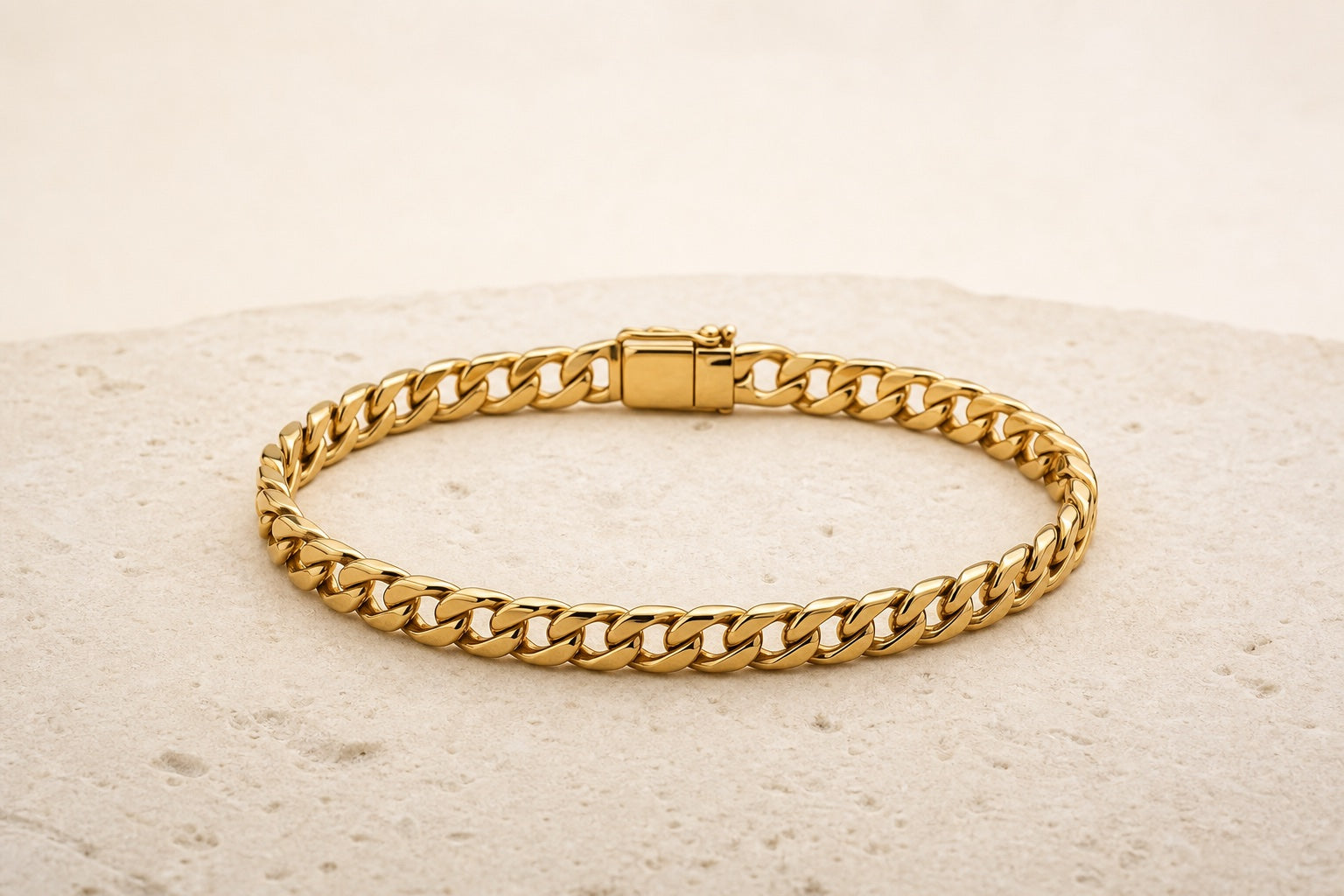
The clasp is often the first visible wear point.
Bracelet gold plating
Gold plate your bracelet so it can be worn again.
Bracelets show wear quickly at clasps, edges, links and contact areas. LAFFARTS assesses the appropriate gold layer and whether replating makes sense before shipment.
Bracelet gold plating
Bracelets need clear photos of contact areas.
Bracelets experience more friction than many other jewelry pieces. Clasp, underside and outer surfaces help determine whether 1, 3 or 5 µm is appropriate.
The real issue
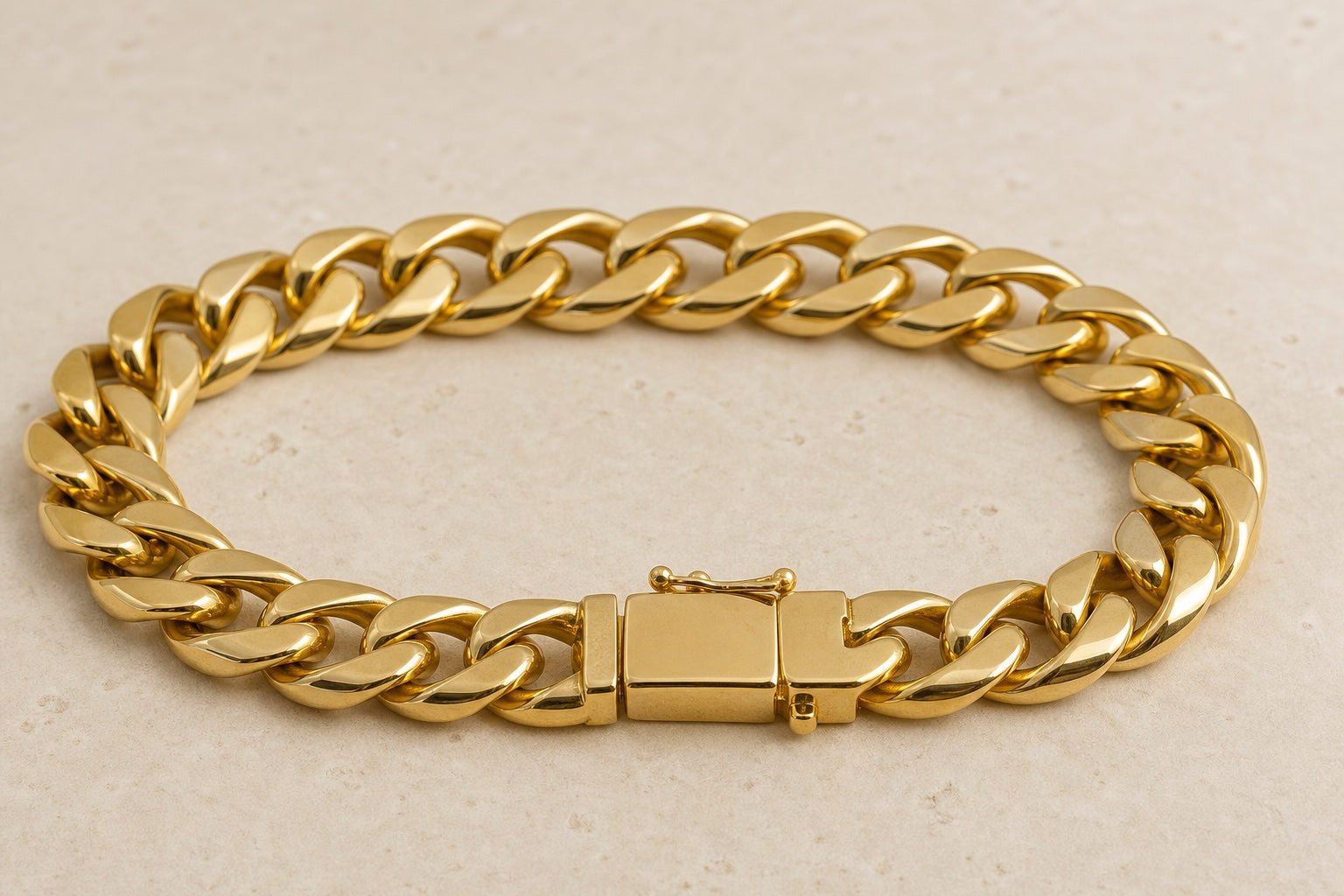
A bracelet is not sitting in a display case. It moves, rubs and is constantly visible.
That is why the plating must do more than look good on day one. It needs to match the material, construction and intended use.
Movement and contact quickly expose worn coating.
Large visible surfaces need clean preparation and a consistent gold tone.
Think before / after
Turn a worn bracelet back into a piece you want to put on.
The focus is a coherent gold appearance, a wearable surface and a realistic recommendation for everyday use or special occasions.
What is visible on the wrist should look consistent.
Friction influences the layer thickness.
Mechanical areas need their own assessment.
What can go wrong
With bracelets, the main risk lies in movement and friction.
A smooth bangle, a link bracelet and a clasp behave very differently. Clear photos and a proper assessment matter before work begins.
Not every area should be treated the same way.
Inner surfaces and contact points experience more friction.
Use and material need to be assessed in advance.
What we assess
Bangle, link bracelet or jewelry bracelet: each has its own requirements.
Large visible surface, consistent gold appearance and edge assessment.
Many contact points and moving parts.
Mechanism, friction and visible wear.
Process
Photos. Assessment. Recommendation. Only then send it in.
Photograph the complete bracelet, clasp, inner surface and worn areas.
Material, condition, surface and intended use are professionally assessed.
1, 3 or 5 µm is recommended according to the bracelet and intended use.
Only after reviewing the price range and process do you decide whether to send it in.
Price & gold layer
Price depends on length, surface area, movement and gold-layer thickness.
A delicate bracelet differs from a heavy bangle or link bracelet with many friction points.
for decorative bracelets with low wear.
for bracelets worn regularly with normal movement.
for heavy wear, solid bangles or high-contact areas after assessment.
Why LAFFARTS
A bracelet needs a recommendation that reflects real everyday wear.
LAFFARTS assesses not only color, but also movement, friction, clasp and intended use.
No material or durability promises without photos and assessment.
Every piece receives a recommendation based on condition, use and expectations.
The next step is not sales pressure, but a clear assessment.
Key questions
Most mistakes happen when every bracelet is treated the same way.
Construction changes price, effort and durability.
Daily wear requires a different gold-layer recommendation.
Wear often becomes visible there first.
Useful next steps
If you want to compare first, continue with the most useful next step.
Prices, process, ring and chain pages help put the decision in context.
Questions
Frequently asked questions about bracelet gold plating.
Was kostet Bracelet gold plating?
Price depends on length, surface area, construction, condition, clasp and gold-layer thickness. Photos are enough to start.
Is a bangle simpler than a link bracelet?
Often yes, because there are fewer moving contact points, though the visible surface may be larger.
Which gold layer is appropriate?
For everyday wear, 3 or 5 µm may be appropriate depending on wear and material.
Can the clasp be gold plated too?
It must be assessed because mechanism and friction matter.
Which photos does LAFFARTS need?
Full view, clasp, inner surface, edges and worn areas.
Do I need to send the bracelet in immediately?
No. Send photos first, receive an assessment, then decide.
Photos are enough to start
Send photos of your bracelet. We will tell you what makes sense.
Whether bangle, link bracelet or jewelry bracelet: we assess condition, use and gold layer from photos, then you decide.