
Gold plate your pendant so it looks refined again.
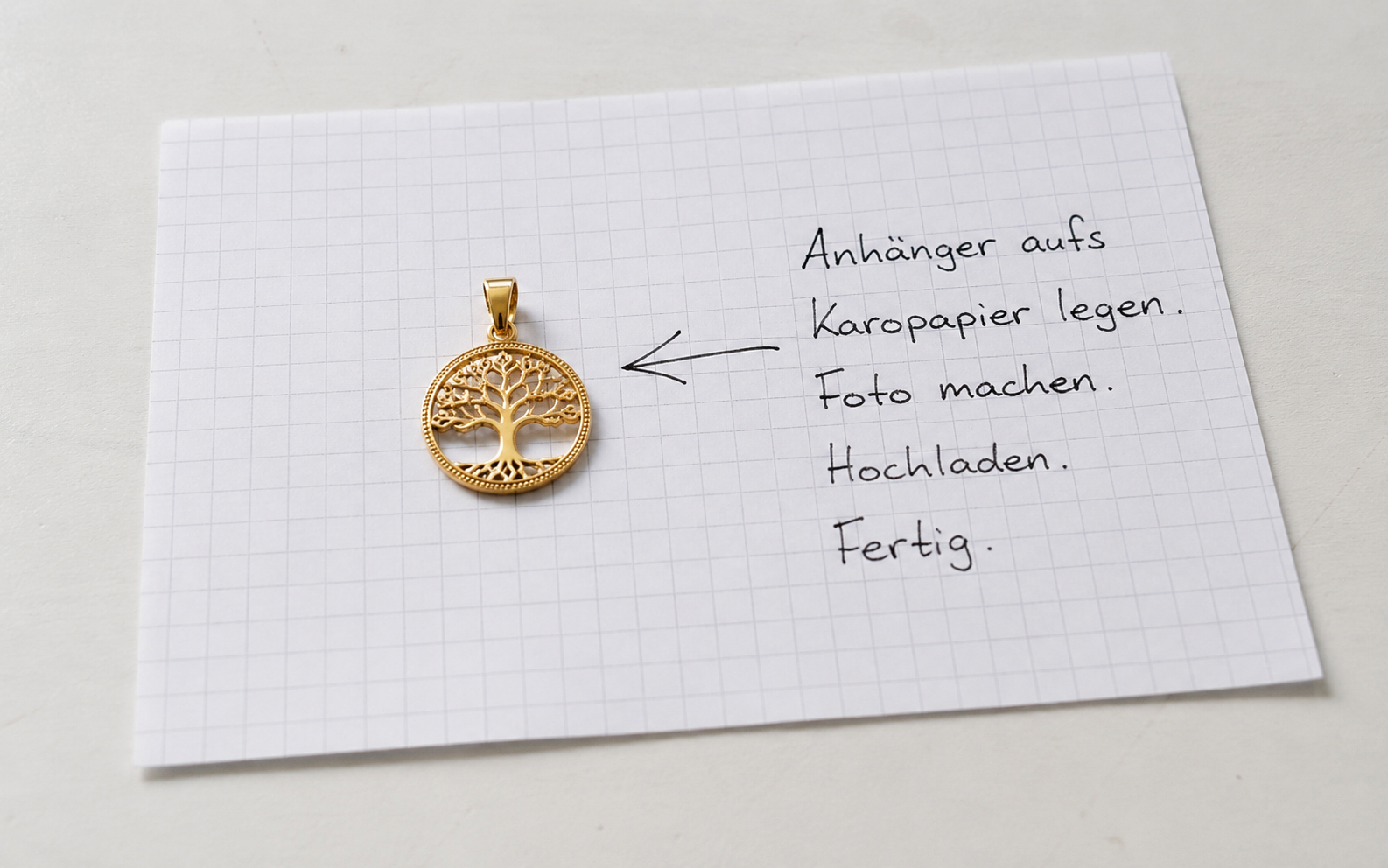
A pendant is always visible. When edges, the back or the bail are worn, the whole piece can look tired. We assess shape, bail, engraving, material and desired gold appearance by photo.
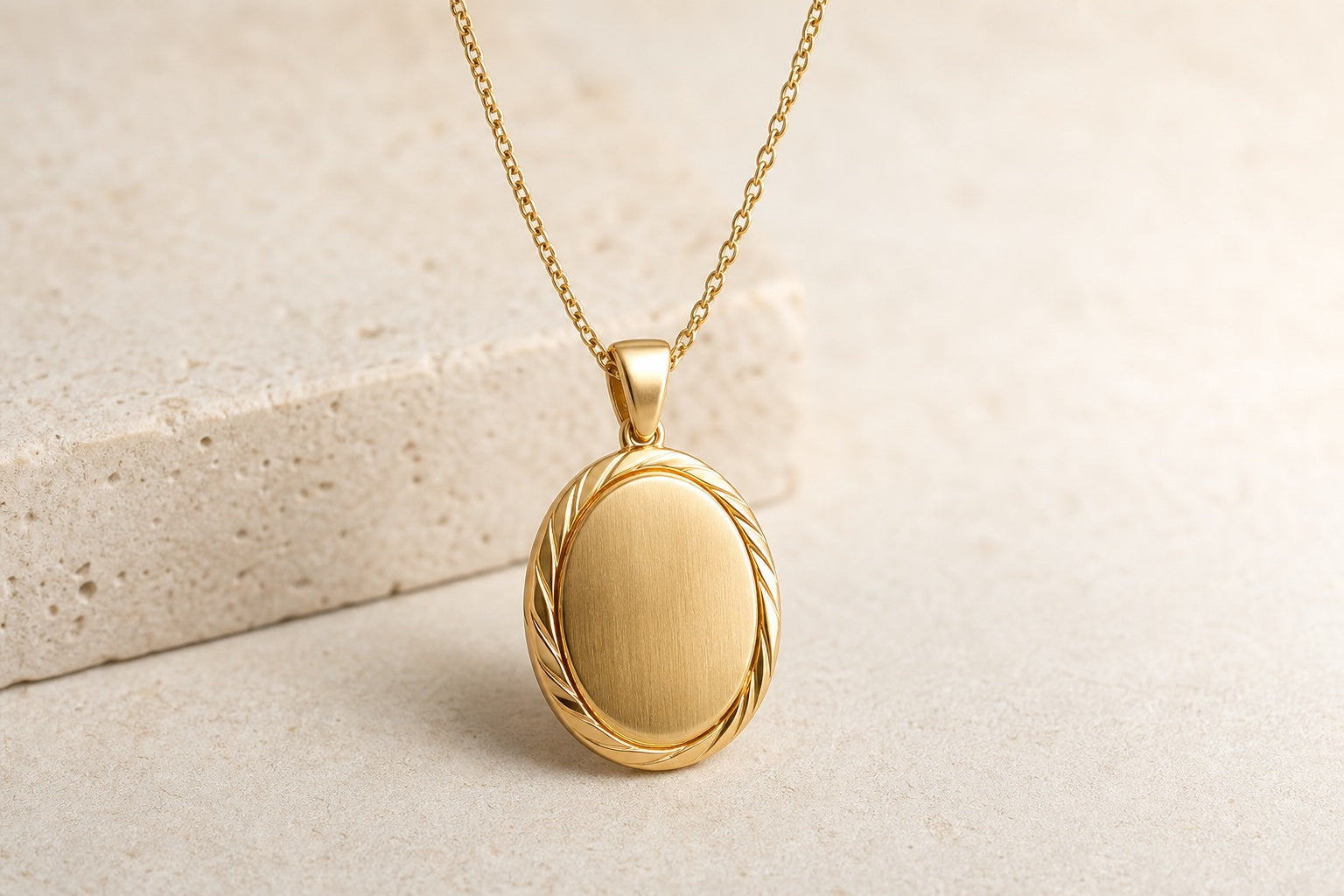
Pendants are defined by surface, bail and edges.
For pendants, the front, back, bail and any stones or engravings matter. Photos help assess the work before shipment.

Turn visible wear back into a wearable finish.
On pendants, medallions, crosses, charms and bails, the visible quality often depends on small details such as edges and contact points. These areas strongly influence the finished result.
Gold plating a pendant means assessing surface area, bail and edges properly.
The recommendation considers material, existing coating, wear and the desired appearance.
Base material, existing coating and condition determine preparation and risk.
Contact points and movement show which gold layer is appropriate.
You receive a realistic assessment rather than an empty promise.
Problems start when a price is promised too early.
Pendant gold plating can look simple. It becomes costly when wear, material or intended use is assessed incorrectly.
High-contact areas need a different recommendation from purely visible surfaces.
Without proper preparation, the gold finish will not look consistent.
14k, 18k or 24k needs to suit the piece and the desired appearance.
For pieces meant to be worn, not left in a drawer.
When silver, brass or the base material becomes visible again.
When emotional value matters more than replacing the piece.
When the piece should look refined again before it is given to someone.
Photos first. Assessment second. Shipment only afterwards.
Several angles, worn areas and your preferred gold tone are enough to start.
We assess condition, use and suitable gold-layer options.
Price is based on actual surface area, preparation and gold-layer thickness.
Only after approval is the piece safely sent in.
Cost depends on surface area, preparation and gold layer.
That is why a photo-based quote is better than a blanket price. Even a small piece can require significant work when details, edges or existing coatings are complex.
We would rather say no beforehand than make excuses afterwards.
The goal is not a quick order. It is a result you actually want to wear or give. That is why the piece is assessed first.
Wear points are assessed before shipment.
The recommendation is based on everyday wear, friction and expectations.
If something is not technically sensible, we say so before work begins.
The questions come before shipment.
Durability depends on layer thickness, use, friction and preparation.
A reliable price comes after photos and assessment.
That is exactly why we assess photos and condition first.
If you want to continue another way.
Clarify the basics, then decide properly.
Pendant replating can make sense when the piece should continue to be worn and the existing finish is no longer satisfactory.
Can I receive a quote first?
Yes. Send photos before you ship the piece.
Which gold layer is appropriate?
It depends on use, surface area, friction and expectations. We do not recommend blindly.
Can cleaning replace replating?
No. Cleaning removes dirt but cannot rebuild a worn gold layer.
How do I start?
Start with photos of the complete piece and close-ups of worn areas.
Send photos before you ship the piece.
We assess pendant, medallion, cross, charm and bail, identify risks and recommend an appropriate gold layer.